
A slip is a record of a sale that has already changed
The sale goes on a slip, the slip goes in the drawer, and three days later the contractor is back with two of the ten sheets. Now the slip is wrong. The cash that has to go back is right, because you counted it in front of him — but nothing you wrote down says so, and by the end of the week nobody can tell you what that customer actually bought and actually paid.
Then there is the tab. Half the shop's turnover walks out with people who pay on Saturday, or the Saturday after. That list lives in one person's head and in a notebook nobody else can read, and it is the single most expensive thing in the shop to get wrong.
What Kipsy does that a general app doesn't
A cash sale in one sentence
Say “Verma ji ko 2 plywood 19mm aur ek fevicol, 3050 cash liye” and it writes the sale, the rate on each line and the money taken. Set your rates once; after that a counter sale is faster than the slip was.
When something comes back, so does the money
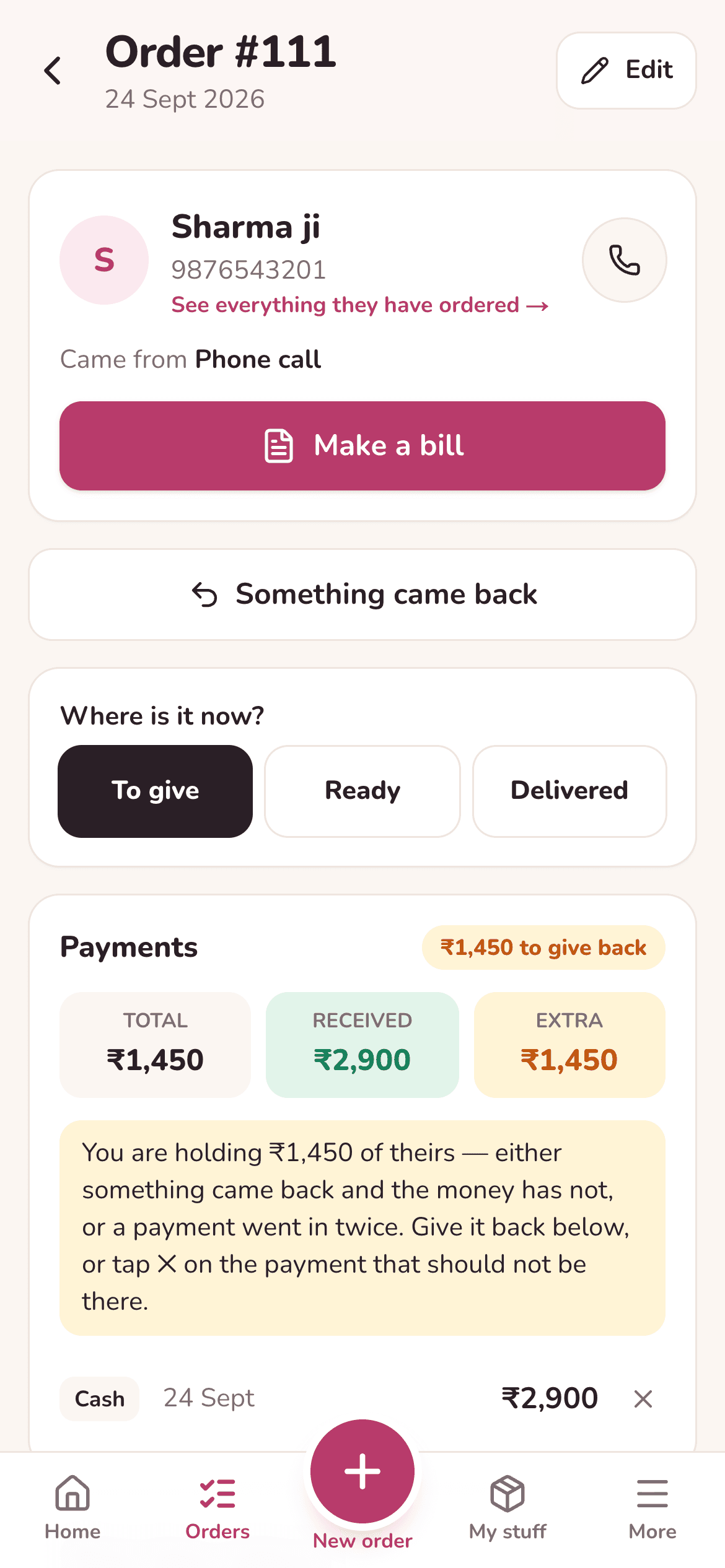
Say how many came back. The bill becomes what they actually kept, the cash going out is recorded against the same sale, and until you hand it over Kipsy says plainly that you are holding their money.
Who still owes you, without the notebook
Every sale carries what was paid and what was not. The tab stops being a page in somebody’s handwriting and becomes a list with a total, and a name you can ring from the screen.
What should be in the box at closing
Cash taken, less cash handed back, less what you spent from the drawer. One line at the top of the screen, so the evening count either agrees or tells you to look.
One sale, and the sheet that came back
The ordinary shape of a counter sale in a plywood shop — which is not finished on the day it is made.
- 2 plywood 19mm 8x4, at ₹1,450
- ₹2,900
- Paid, cash, over the counter
- ₹2,900
- Three days later, 1 sheet comes back
- − ₹1,450
- The bill is now
- ₹1,450
- Cash handed back
- ₹1,450
Between the return and the refund, Kipsy says you are holding ₹1,450 of theirs — the state a slip cannot show. Afterwards the sale reads ₹1,450, paid in full, with both sheets and both cash movements still on the record.
Questions hardware & plywood shops ask
Can I use it only for the cash side?
Yes. Plenty of shops do. Put in what you sell and the rates, and use it as the cash book — sales, what came back, and who still owes. Stock and cost prices are there if you want them later, and ignored if you don’t.
What happens when a customer returns something a week later?
Open that sale, say how many came back, and the bill corrects itself. If you hand the cash over at the same time it is recorded against the same sale; if not, Kipsy keeps saying you owe it until you do.
I have hundreds of items. Is that a problem?
No. Type two letters and the right one comes up, and the things you sell every day stay in front of you without being searched for.
Can two people at the counter use it?
Not yet — one login per shop today. If you need a second person entering sales, tell us; it is the next thing on the list for shops.
Kipsy is also used by
Want one for your own business?
Free to start, and it takes about a minute — with Google, or with your email. Your first order can be one you simply say out loud.
Rather ask a person first? Message us on WhatsApp